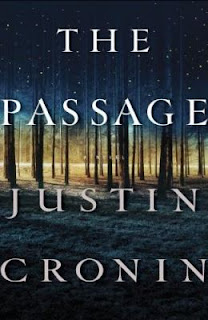
Jane Eyre by Charlotte Bronte
Born into a poor family and raised by an oppressive aunt, young Jane Eyre becomes the governess at Thornfield Manor to escape the confines of her life. There her fiery independence clashes with the brooding and mysterious nature of her employer, Mr. Rochester. But what begins as outright loathing slowly evolves into a passionate romance. When a terrible secret from Rochester's past threatens to tear the two apart, Jane must make an impossible choice: Should she follow her heart or walk away and lose her love forever?
Unabashedly romantic and utterly enthralling, Jane Eyre endures as one of the greatest love stories of all time. -product description
Disucssion Questions, About the Author, Related Titles
Friday, April 1, 2011
Wednesday, March 2, 2011
Beth's Picks--March 2011

Little Princes by Conor Grennan
Summary:
One Person Can Make a Difference In search of adventure, twenty-nine-year-old Conor Grennan traded his day job for a year-long trip around the globe, a journey that began with a three-month stint volunteering at the Little Princes Children's Home, an orphanage in war-torn Nepal. Conor was initially reluctant to volunteer, unsure whether he had the proper skill, or enough passion, to get involved in a developing country in the middle of a civil war. But he was soon overcome by the herd of rambunctious, resilient children who would challenge and reward him in a way that he had never imagined. When Conor learned the unthinkable truth about their situation, he was stunned: The children were not orphans at all. Child traffickers were promising families in remote villages to protect their children from the civil war-for a huge fee-by taking them to safety. They would then abandon the children far from home, in the chaos of Nepal's capital, Kathmandu. For Conor, what began as a footloose adventure becomes a commitment to reunite the children he had grown to love with their families, but this would be no small task. He would risk his life on a journey through the legendary mountains of Nepal, facing the dangers of a bloody civil war and a debilitating injury. Waiting for Conor back in Kathmandu, and hopeful he would make it out before being trapped in by snow, was the woman who would eventually become his wife and share his life's work. Little Princes is a true story of families and children, and what one person is capable of when faced with seemingly insurmountable odds. At turns tragic, joyful, and hilarious, Little Princes is a testament to the power of faith and the ability of love to carry us beyond our wildest expectations.
About the Author:
http://www.harpercollins.com/author/microsite/about.aspx?authorid=36296
Author discusses Little Princes:
http://www.youtube.com/watch?v=SzS9v1TBsbM
Review:
New York Journal of Books:
When I received this book in the mail, having only a tiny blurb to read about it, I made the assumption it was a book about a man who had traveled to Nepal and adopted children internationally after working at the orphanage. I couldn’t have been more wrong. This is instead the story of a man who refused to turn a blind eye when hints surfaced that death certificates had been forged, that government corruption was rampant, and that child slavery was common in Nepal.
Little Princes is the story of what happens when you pursue the truth and passionately seek to solve a complicated social problem in a country with little or no infrastructure and few resources. It is a gorgeous story of love and passion and what happens when you choose to follow a path that you didn’t know existed.
Grennan, from time to time, returned home to the United States to visit family. During one of those visits in 2006, he set up a foundation to protect the children of Nepal. The foundation is a nonprofit called Next Generation Nepal. It has a website for more information or involvement.
While advocating for funding of the nonprofit and making connections, Grennan received an email from a fellow University of Virginia graduate named Liz looking for information about volunteering in an orphanage. Her email correspondence progressed and eventually became a plan to meet when she also comes to India and to work in an orphanage. Without giving the ending away, this story also contains a healthy dose of romance.
In light of the very real discovery of rampant child trafficking in Nepal, there should also be more thought given to the complex situations in many areas of the world where war, poverty, and natural disaster might have bred similar opportunities. There are tens of thousands of children still missing in Nepal.
Grennan’s foundation remains active and continues to reunite children with their families. http://www.nextgenerationnepal.org/
Summary:
One Person Can Make a Difference In search of adventure, twenty-nine-year-old Conor Grennan traded his day job for a year-long trip around the globe, a journey that began with a three-month stint volunteering at the Little Princes Children's Home, an orphanage in war-torn Nepal. Conor was initially reluctant to volunteer, unsure whether he had the proper skill, or enough passion, to get involved in a developing country in the middle of a civil war. But he was soon overcome by the herd of rambunctious, resilient children who would challenge and reward him in a way that he had never imagined. When Conor learned the unthinkable truth about their situation, he was stunned: The children were not orphans at all. Child traffickers were promising families in remote villages to protect their children from the civil war-for a huge fee-by taking them to safety. They would then abandon the children far from home, in the chaos of Nepal's capital, Kathmandu. For Conor, what began as a footloose adventure becomes a commitment to reunite the children he had grown to love with their families, but this would be no small task. He would risk his life on a journey through the legendary mountains of Nepal, facing the dangers of a bloody civil war and a debilitating injury. Waiting for Conor back in Kathmandu, and hopeful he would make it out before being trapped in by snow, was the woman who would eventually become his wife and share his life's work. Little Princes is a true story of families and children, and what one person is capable of when faced with seemingly insurmountable odds. At turns tragic, joyful, and hilarious, Little Princes is a testament to the power of faith and the ability of love to carry us beyond our wildest expectations.
About the Author:
http://www.harpercollins.com/author/microsite/about.aspx?authorid=36296
Author discusses Little Princes:
http://www.youtube.com/watch?v=SzS9v1TBsbM
Review:
New York Journal of Books:
When I received this book in the mail, having only a tiny blurb to read about it, I made the assumption it was a book about a man who had traveled to Nepal and adopted children internationally after working at the orphanage. I couldn’t have been more wrong. This is instead the story of a man who refused to turn a blind eye when hints surfaced that death certificates had been forged, that government corruption was rampant, and that child slavery was common in Nepal.
Little Princes is the story of what happens when you pursue the truth and passionately seek to solve a complicated social problem in a country with little or no infrastructure and few resources. It is a gorgeous story of love and passion and what happens when you choose to follow a path that you didn’t know existed.
Grennan, from time to time, returned home to the United States to visit family. During one of those visits in 2006, he set up a foundation to protect the children of Nepal. The foundation is a nonprofit called Next Generation Nepal. It has a website for more information or involvement.
While advocating for funding of the nonprofit and making connections, Grennan received an email from a fellow University of Virginia graduate named Liz looking for information about volunteering in an orphanage. Her email correspondence progressed and eventually became a plan to meet when she also comes to India and to work in an orphanage. Without giving the ending away, this story also contains a healthy dose of romance.
In light of the very real discovery of rampant child trafficking in Nepal, there should also be more thought given to the complex situations in many areas of the world where war, poverty, and natural disaster might have bred similar opportunities. There are tens of thousands of children still missing in Nepal.
Grennan’s foundation remains active and continues to reunite children with their families. http://www.nextgenerationnepal.org/
Book Discussion Questions:
Tuesday, March 1, 2011
Best in Books March 2011
Columbine by David Cullen
Columbine received the 2010 Reference and User Service Association's Notable Books for Adults Nonfiction Award and the 2010 Edgar Award for Best Fact Crime.
On April 20, 1999, two boys left an indelible stamp on the American psyche. Their goal was simple: to blow up their school, Oklahoma-City style, and to leave "a lasting impression on the world." Their bombs failed, but the ensuing shooting defined a new era of school violence-irrevocably branding every subsequent shooting "another Columbine." When we think of Columbine, we think of the Trench Coat Mafia; we think of Cassie Bernall, the girl we thought professed her faith before she was shot; and we think of the boy pulling himself out of a school window -- the whole world was watching him. Now, in a riveting piece of journalism nearly ten years in the making, comes the story none of us knew. In this revelatory book, Dave Cullen has delivered a profile of teenage killers that goes to the heart of psychopathology. He lays bare the callous brutality of mastermind Eric Harris, and the quavering, suicidal Dylan Klebold, who went to prom three days earlier and obsessed about love in his journal. The result is an astonishing account of two good students with lots of friends, who came to stockpile a basement cache of weapons, to record their raging hatred, and to manipulate every adult who got in their way. They left signs everywhere, described by Cullen with a keen investigative eye and psychological acumen. Drawing on hundreds of interviews, thousands of pages of police files, FBI psychologists, and the boy's tapes and diaries, he gives the first complete account of the Columbine tragedy. In the tradition of HELTER SKELTER and IN COLD BLOOD, COLUMBINE is destined to be a classic. A close-up portrait of hatred, a community rendered helpless, and the police blunders and cover-ups, it is a compelling and utterly human portrait of two killers-an unforgettable cautionary tale for our times.
Reviews
Booklist Review
*Starred Review* Although much has been written about the 1999 shooting at Columbine High School, little of it has helped to explain why two high-school students went on a rampage, killing 13 people and wounding scores of others. Cullen, acclaimed expert on Columbine, offers a penetrating look at the motivation and intent of the shooters, Eric Harris and Dylan Klebold. Drawing on interviews, police records, media coverage, and diaries and videotapes left behind by the shooters, Cullen examines the killers' beliefs and psychological states of mind. Chilling journal entries show a progression from adolescent angst to psychopathic rage as they planned a multistage killing spree that included bombs that ultimately didn't detonate. Cullen goes beyond detailing the planning and execution of the shootings, delving into the early lives of the killers as well. He explores the aftermath for the town of Littleton, Colorado: survivors' stories, investigation into how the sheriff's department mishandled the crisis, several ongoing legal issues, exploitation of the shooting by some religious groups and sensationalists, and the school's battle to regain its identity. Cullen debunks several Columbine myths, including the goth angle and a martyrdom story of a girl who proclaimed her belief in God before she was killed. Graphic and emotionally vivid; spectacularly researched and analyzed.--Bush, Vanessa Copyright 2009 Booklist
Publishers Weekly Review
In this remarkable account of the April 20, 1999, Columbine High School shooting, journalist Cullen not only dispels several of the prevailing myths about the event but tackles the hardest question of all: why did it happen? Drawing on extensive interviews, police reports and his own reporting, Cullen meticulously pieces together what happened when 18-year-old Eric Harris and 17-year-old Dylan Klebold killed 13 people before turning their guns on themselves. The media spin was that specific students, namely jocks, were targeted and that Dylan and Eric were members of the Trench Coat Mafia. According to Cullen, they lived apparently normal lives, but under the surface lay "an angry, erratic depressive" (Klebold) and "a sadistic psychopath" (Harris), together forming a "combustible pair." They planned the massacre for a year, outlining their intentions for massive carnage in extensive journals and video diaries. Cullen expertly balances the psychological analysis-enhanced by several of the nation's leading experts on psychopathology-with an examination of the shooting's effects on survivors, victims' families and the Columbine community. Readers will come away from Cullen's unflinching account with a deeper understanding of what drove these boys to kill, even if the answers aren't easy to stomach. (Apr. 6) (c) Copyright PWxyz, LLC. All rights reserved
Booklist Review
*Starred Review* Although much has been written about the 1999 shooting at Columbine High School, little of it has helped to explain why two high-school students went on a rampage, killing 13 people and wounding scores of others. Cullen, acclaimed expert on Columbine, offers a penetrating look at the motivation and intent of the shooters, Eric Harris and Dylan Klebold. Drawing on interviews, police records, media coverage, and diaries and videotapes left behind by the shooters, Cullen examines the killers' beliefs and psychological states of mind. Chilling journal entries show a progression from adolescent angst to psychopathic rage as they planned a multistage killing spree that included bombs that ultimately didn't detonate. Cullen goes beyond detailing the planning and execution of the shootings, delving into the early lives of the killers as well. He explores the aftermath for the town of Littleton, Colorado: survivors' stories, investigation into how the sheriff's department mishandled the crisis, several ongoing legal issues, exploitation of the shooting by some religious groups and sensationalists, and the school's battle to regain its identity. Cullen debunks several Columbine myths, including the goth angle and a martyrdom story of a girl who proclaimed her belief in God before she was killed. Graphic and emotionally vivid; spectacularly researched and analyzed.--Bush, Vanessa Copyright 2009 Booklist
Publishers Weekly Review
In this remarkable account of the April 20, 1999, Columbine High School shooting, journalist Cullen not only dispels several of the prevailing myths about the event but tackles the hardest question of all: why did it happen? Drawing on extensive interviews, police reports and his own reporting, Cullen meticulously pieces together what happened when 18-year-old Eric Harris and 17-year-old Dylan Klebold killed 13 people before turning their guns on themselves. The media spin was that specific students, namely jocks, were targeted and that Dylan and Eric were members of the Trench Coat Mafia. According to Cullen, they lived apparently normal lives, but under the surface lay "an angry, erratic depressive" (Klebold) and "a sadistic psychopath" (Harris), together forming a "combustible pair." They planned the massacre for a year, outlining their intentions for massive carnage in extensive journals and video diaries. Cullen expertly balances the psychological analysis-enhanced by several of the nation's leading experts on psychopathology-with an examination of the shooting's effects on survivors, victims' families and the Columbine community. Readers will come away from Cullen's unflinching account with a deeper understanding of what drove these boys to kill, even if the answers aren't easy to stomach. (Apr. 6) (c) Copyright PWxyz, LLC. All rights reserved
David Cullen web site
Monday, February 28, 2011
Classic Suggestion March 2011
Vanity Fair by William Thackeray
“I think I could be a good woman, if I had five thousand a year,” observes beautiful and clever Becky Sharp, one of the wickedest—and most appealing—women in all of literature. Becky is just one of the many fascinating figures that populate William Makepeace Thackeray’s novel Vanity Fair, a wonderfully satirical panorama of upper-middle-class life and manners in London at the beginning of the nineteenth century.
Scorned for her lack of money and breeding, Becky must use all her wit, charm and considerable sex appeal to escape her drab destiny as a governess. From London’s ballrooms to the battlefields of Waterloo, the bewitching Becky works her wiles on a gallery of memorable characters, including her lecherous employer, Sir Pitt, his rich sister, Miss Crawley, and Pitt’s dashing son, Rawdon, the first of Becky’s misguided sexual entanglements.
Filled with hilarious dialogue and superb characterizations, Vanity Fair is a richly entertaining comedy that asks the reader, “Which of us is happy in this world? Which of us has his desire? or, having it, is satisfied?”
-Product Description
Discussion Questions
William Thackeray Biography
Wikipedia Article
“I think I could be a good woman, if I had five thousand a year,” observes beautiful and clever Becky Sharp, one of the wickedest—and most appealing—women in all of literature. Becky is just one of the many fascinating figures that populate William Makepeace Thackeray’s novel Vanity Fair, a wonderfully satirical panorama of upper-middle-class life and manners in London at the beginning of the nineteenth century.
Scorned for her lack of money and breeding, Becky must use all her wit, charm and considerable sex appeal to escape her drab destiny as a governess. From London’s ballrooms to the battlefields of Waterloo, the bewitching Becky works her wiles on a gallery of memorable characters, including her lecherous employer, Sir Pitt, his rich sister, Miss Crawley, and Pitt’s dashing son, Rawdon, the first of Becky’s misguided sexual entanglements.
Filled with hilarious dialogue and superb characterizations, Vanity Fair is a richly entertaining comedy that asks the reader, “Which of us is happy in this world? Which of us has his desire? or, having it, is satisfied?”
-Product Description
Discussion Questions
William Thackeray Biography
Wikipedia Article
Tuesday, February 1, 2011
Classic Suggestion February 2011
The Mill on the Floss by George Eliot
Novel by George Eliot, published in three volumes in 1860. It sympathetically portrays the vain efforts of Maggie Tulliver to adapt to her provincial world. The tragedy of her plight is underlined by the actions of her brother Tom, whose sense of family honor leads him to forbid her to associate with the one friend who appreciates her intelligence and imagination. When she is caught in a compromising situation, Tom renounces her altogether, but brother and sister are finally reconciled in the end as they try in vain to survive a climactic flood. -- The Merriam-Webster Encyclopedia of Literature
Discussion Questions
George Eliot Biography
Wikipedia Article
Novel by George Eliot, published in three volumes in 1860. It sympathetically portrays the vain efforts of Maggie Tulliver to adapt to her provincial world. The tragedy of her plight is underlined by the actions of her brother Tom, whose sense of family honor leads him to forbid her to associate with the one friend who appreciates her intelligence and imagination. When she is caught in a compromising situation, Tom renounces her altogether, but brother and sister are finally reconciled in the end as they try in vain to survive a climactic flood. -- The Merriam-Webster Encyclopedia of Literature
Discussion Questions
George Eliot Biography
Wikipedia Article
BETH'S PICKS FOR FEBRUARY

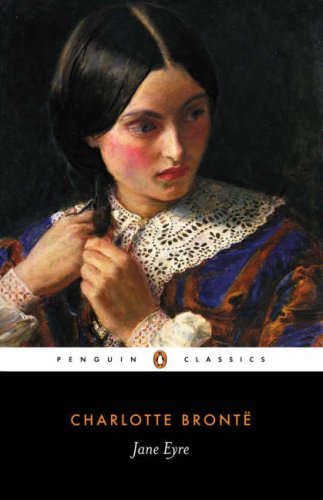
The Passage by Justin Cronin
SUMMARY
It happened fast. Thirty-two minutes for one world to die, another to be born.
First, the unthinkable: a security breach at a secret U.S. government facility unleashes the monstrous product of a chilling military experiment. Then, the unspeakable: a night of chaos and carnage gives way to sunrise on a nation, and ultimately a world, forever altered. All that remains for the stunned survivors is the long fight ahead and a future ruled by fear-of darkness, of death, of a fate far worse.
SUMMARY
It happened fast. Thirty-two minutes for one world to die, another to be born.
First, the unthinkable: a security breach at a secret U.S. government facility unleashes the monstrous product of a chilling military experiment. Then, the unspeakable: a night of chaos and carnage gives way to sunrise on a nation, and ultimately a world, forever altered. All that remains for the stunned survivors is the long fight ahead and a future ruled by fear-of darkness, of death, of a fate far worse.
As civilization swiftly crumbles into a primal landscape of predators and prey, two people flee in search of sanctuary. FBI agent Brad Wolgast is a good man haunted by what he#x19;s done in the line of duty. Six-year-old orphan Amy Harper Bellafonte is a refugee from the doomed scientific project that has triggered apocalypse. He is determined to protect her from the horror set loose by her captors. But for Amy, escaping the bloody fallout is only the beginning of a much longer odyssey-spanning miles and decades-towards the time and place where she must finish what should never have begun. With The Passage, award-winning author Justin Cronin has written both a relentlessly suspenseful adventure and an epic chronicle of human endurance in the face of unprecedented catastrophe and unimaginable danger. Its inventive storytelling, masterful prose, and depth of human insight mark it as a crucial and transcendent work of modern fiction.
AUTHOR HOME PAGE
About Justin Cronin
Justin Cronin (born 1962) is an American author. He has written three novels: Mary and O'Neil, The Summer Guest and The Passage. Awards he has won include the PEN/Hemingway Award, the Stephen Crane Prize, and the Whiting Writer's Award.[1]
Born and raised in New England, Cronin is a graduate of Harvard University and the Iowa Writers’ Workshop. He taught creative writing and was the "Author in-residence" at La Salle University in Philadelphia, PA from 1992 to 2005. He lives with his wife and children in Houston, Texas where he is a professor of English at Rice University.[2]
In July 2007, Variety reported that the screen rights to Cronin's vampire trilogy was purchased by Fox 2000.[3] The first book of the series, The Passage, was released in June 2010.[4] It garnered mainly favorable reviews.[5][6] (from Wikipedia)
Justin Cronin (born 1962) is an American author. He has written three novels: Mary and O'Neil, The Summer Guest and The Passage. Awards he has won include the PEN/Hemingway Award, the Stephen Crane Prize, and the Whiting Writer's Award.[1]
Born and raised in New England, Cronin is a graduate of Harvard University and the Iowa Writers’ Workshop. He taught creative writing and was the "Author in-residence" at La Salle University in Philadelphia, PA from 1992 to 2005. He lives with his wife and children in Houston, Texas where he is a professor of English at Rice University.[2]
In July 2007, Variety reported that the screen rights to Cronin's vampire trilogy was purchased by Fox 2000.[3] The first book of the series, The Passage, was released in June 2010.[4] It garnered mainly favorable reviews.[5][6] (from Wikipedia)
REVIEWS
Library Journal Review
Kirkus
Literary author Cronin (Mary and O'Neil, 2001, etc.) turns in an apocalyptic thriller in the spirit of Stephen King or Michael Crichton.You know times are weird when swarms of Bolivian bats swoop from the skies and kill humans—or, as one eyewitness reports of an unfortunate GI, off fighting the good fight against the drug lords, "they actually lifted him off his feet before they bored through him like hot knives through butter." Meanwhile, up north, in the very near future, gasoline prices are soaring and New Orleans has been hit by a second hurricane. Wouldn't you know it, but the world is broken, and mad science has something to do with it—in this instance, the kind of mad science that involves trying to engineer super-soldiers but that instead has created a devastating epidemic, with zombie flourishes—here called "virals"—and nods to Invasion of the Body Snatchers and pretty much every other creature feature. Bad feds and good guys alike race around, trying to keep the world safe for American democracy. In the end the real protector of civilization turns out to be a "little girl in Iowa," Amy Harper Bellafonte, who has been warehoused in a nunnery by her down-on-her-luck mother. Mom, a waitress with hidden resources of her own, pitches in, as does a world-weary FBI agent—is there any other kind? Thanks to Amy, smart though shy, the good guys prevail. Or so we think, but you probably don't want to go opening your door at night to find out.The young girl as heroine and role model is a nice touch. Otherwise a pretty ordinary production, with little that hasn't been seen before.
Publishers Weekly Review
Fans of vampire fiction who are bored by the endless hordes of sensitive, misunderstood Byronesque bloodsuckers will revel in Cronin's engrossingly horrific account of a post-apocalyptic America overrun by the gruesome reality behind the wish-fulfillment fantasies. When a secret project to create a super-soldier backfires, a virus leads to a plague of vampiric revenants that wipes out most of the population. One of the few bands of survivors is the Colony, a FEMA-established island of safety bunkered behind massive banks of lights that repel the "virals," or "dracs"-but a small group realizes that the aging technological defenses will soon fail. When members of the Colony find a young girl, Amy, living outside their enclave, they realize that Amy shares the virals' agelessness, but not the virals' mindless hunger, and they embark on a search to find answers to her condition. PEN/Hemingway Award-winner Cronin (The Summer Guest ) uses a number of tropes that may be overly familiar to genre fans, but he manages to engage the reader with a sweeping epic style. The first of a proposed trilogy, it's already under development by director Ripley Scott and the subject of much publicity buzz.
Booklist Review
In this apocalyptic epic that begins in a gloomy near-future, gasoline is $13 a gallon; New Orleans has become an uninhabitable, toxic swamp after a series of devastating hurricanes; the U.S. is steadily losing the war on terror; and the future of humanity hinges on the actions of a young girl. Six-year-old Amy Harper Bellafonte, abandoned to the care of Memphis nuns by her prostitute mother, and her protector, disillusioned FBI agent Brad Wolgast, are at the epicenter of a battle to preserve the human species after a government military experiment to create a super-soldier goes awry. Using an exotic virus found deep in the South American jungle, scientists have discovered that it has the ability to bestow vast strength and instantaneous healing abilities on humans, with one serious side effect: it turns its victims into bloodthirsty (literally) monsters. This door-stopper of a novel is such an homage to Stephen King's The Stand (in length as well as plot), along with Firestarter and even Salem's Lot, that it required some fact-checking to ascertain it was not written under a new King pseudonym.
Best in Books February 2011
The Bodies Left Behind by Jeffery Deaver
A fast-paced story that keeps the reader on the edge of their seat won the 2009 International Thriller Writers Best Thriller of the Year Award. The tone for this book is both suspenseful and violent which may not be appealing to all readers looking for action. Some twists found later in the story certainly make the reader realize that Deaver will not allow your assumptions to play out in the end.
Booklist Review
/*Starred Review*/ Deaver, who has written one excellent thriller after another, is such a good puppet master that he makes us believe whatever he wants us to believe, even things that are false, without telling us a single lie. He practices misdirection through dialogue: a character says something he believes to be true, and so we believe it, too, without questioning the assumptions on which the character is basing his statement. A perfect example of how this technique can be used to perfection occurs in Deaver's latest, in which Brynn McKenzie, a Michigan police deputy investigating a suspicious 911 emergency call, finds herself being pursued through the woods by a pair of killers. And when she meets up with a woman who is also being hunted, Brynn has two lives to protect, and precious few resources with which to do it. The novel, which in some places may remind readers of Barry England's Figures in a Landscape (1997), is vintage Deaver: tightly plotted, with plenty of right-angle plot twists and pitch-perfect dialogue. It's not until we're well more than halfway through the book that we even begin to suspect that we might have made some dangerous mistakes, accepted certain things at face value merely because the characters in the book sold them to us so successfully—but by then, it's way too late, and we are completely at Deaver's mercy. -- Pitt, David (Reviewed 09-15-2008) (Booklist, vol 105, number 2, p4)
First Chapter by Novelist
Jeffery Deaver biography and website
A fast-paced story that keeps the reader on the edge of their seat won the 2009 International Thriller Writers Best Thriller of the Year Award. The tone for this book is both suspenseful and violent which may not be appealing to all readers looking for action. Some twists found later in the story certainly make the reader realize that Deaver will not allow your assumptions to play out in the end.
Booklist Review
/*Starred Review*/ Deaver, who has written one excellent thriller after another, is such a good puppet master that he makes us believe whatever he wants us to believe, even things that are false, without telling us a single lie. He practices misdirection through dialogue: a character says something he believes to be true, and so we believe it, too, without questioning the assumptions on which the character is basing his statement. A perfect example of how this technique can be used to perfection occurs in Deaver's latest, in which Brynn McKenzie, a Michigan police deputy investigating a suspicious 911 emergency call, finds herself being pursued through the woods by a pair of killers. And when she meets up with a woman who is also being hunted, Brynn has two lives to protect, and precious few resources with which to do it. The novel, which in some places may remind readers of Barry England's Figures in a Landscape (1997), is vintage Deaver: tightly plotted, with plenty of right-angle plot twists and pitch-perfect dialogue. It's not until we're well more than halfway through the book that we even begin to suspect that we might have made some dangerous mistakes, accepted certain things at face value merely because the characters in the book sold them to us so successfully—but by then, it's way too late, and we are completely at Deaver's mercy. -- Pitt, David (Reviewed 09-15-2008) (Booklist, vol 105, number 2, p4)
First Chapter by Novelist
Jeffery Deaver biography and website
Subscribe to:
Posts (Atom)