Dracula by Bram Stoker
When Jonathan Harker visits Transylvania to help Count Dracula with the purchase of a London house, he makes a series of horrific discoveries about his client. Soon after wards, various bizarre incidents unfold in England: an apparently unmanned ship is wrecked off the coast of Whitby; a young woman discovers strange puncture marks on her neck; and the inmate of a lunatic asylum raves about the 'Master' and his imminent arrival. In "Dracula", Bram Stoker created one of the great masterpieces of the horror genre, brilliantly evoking a nightmare world of vampires and vampire hunters and also illuminating the dark corners of Victorian sexuality and desire. -Product Description
Book Discussion Questions
More Discussion Questions
Author Biography
Full Text Online
Friday, October 14, 2011
Monday, October 3, 2011
Best in Books October 2011
The Last Child by John HartAwarded the 2009 Dagger Awards: CWA Ian Fleming Steel Dagger and the 2010 Edgar Allan Poe Awards: Best Novel winner. The Last Child quickly moves through layers of twists and turns with surprising revelations.
Review
*Starred Review* When 12-year-old Alyssa Merrimon disappeared a year ago, her family fell apart. her twin brother, Johnny, became obsessed with trying to find her, their father took off, not to be heard from again, and their mother sank into a world of drugs and booze, helped along by an abusive, wealthy boyfriend. Det. Clive Hunt is also obsessed, both with finding Alyssa and with her mother, and his preoccupation costs him his marriage and jeopardizes his job. But this is Johnny's story and his quest to find the sister he lost. Taking his mother's car while she's passed out and occasionally taking along his best friend, Jack, Johnny spies and keeps meticulous records on the townfolk of small Raven County, NC. The world is a dark place when seen through his eyes, and Johnny is an unforgettable character in this finely drawn yet disturbing thriller. With his best novel yet, the Edgar Award-winning Hart (Down River) firmly cements his place alongside the greats of the genre. Highly recommended for all public libraries. --Stacy Alesi, Palm Beach City Lib. Syst., Boca Raton, FL (Reviewed March 1, 2009) (Library Journal, vol 134, issue 4, p64)
Available in WMA electronic audiobook format from the Greather Phoenix Digital Library
John Hart website
Discussion Questions
Saturday, September 3, 2011
Classic Suggestion September 2011
Tess of the D'Urbervilles by Thomas Hardy
Summary:
Etched against the background of a dying rural society, Tess of the d'Urbervilles was Thomas Hardy's "bestseller," and Tess Durbeyfield remains his most striking and tragic heroine. Of all the characters he created, she meant the most to him. Hopelessly torn between two men--Alec d'Urberville, a wealthy, dissolute young man who seduces her in a lonely wood, and Angel Clare, her provincial, moralistic, and unforgiving husband--Tess escapes from her vise of passion through a horrible, desperate act.
"Like the greatest characters in literature, Tess lives beyond the final pages of the book as a permanent citizen of the imagination," said Irving Howe. "In Tess he stakes everything on his sensuous apprehension of a young woman's life, a girl who is at once a simple milkmaid and an archetype of feminine strength. . . . Tess is that rare creature in literature: goodness made interesting." -Amazon.com
Author Biography
Discussion Questions
Tess of the d'Urbervilles is also available for download in audiobook format from the Library's Download Center. Please visit our website to download this item. http://www.mcldaz.org/
Thursday, August 25, 2011
Best in Books September 2011
Bad Blood by John Sandford Bad Blood is the 2011 Thriller Award winner awarded this past July at the International Thriller Writers conference in New York City. The fourth book in the Sandford's Virgil Flowers series stands alone, but will provide readers with the opportunity to catch up with the previous titles. This tightly written fast-paced story is sure to draw the reader into a plot that has shades of a similar true crime that has recently played out in Utah and Texas courts.
Review
An open-and-shut case of murder leads Virgil Flowers, of Minnesota's Bureau of Criminal Apprehension (Rough Country, 2009, etc.),? to a twisted, century-old conspiracy.Despite his efforts to pass off Jacob Flood's death as an accident, it's no secret that Robert Tripp, 19, killed the farmer with a baseball bat. The wounds that were supposed to have disabled Flood had obviously been inflicted after death, and Bobby all but confessed to Warren County Sheriff Lee Coakley. But the case turned darker the night that Coakley arrested her suspect, whose apparent suicide in his cell is pretty clearly murder as well. Jim Crocker, the overnight deputy who was supposed to guard the prisoner but who killed him instead, didn't kill himself, since despite a death scene staged to suggest that he ate his gun, it's obvious to a trained investigator like Virgil Flowers that Crocker was enjoying the favors of a female visitor only a few seconds before he departed this life. As if three murders weren't enough, Virgil swiftly, if intuitively, ties them to a fourth: the sexual violence that claimed the life of high-school student Kelly Baker, who was found naked, violated, but conscientiously scrubbed clean of DNA 14 months ago in a cemetery just across the Iowa border. Once Virgil's begun to question everyone in the town of Battenberg, he's immediately struck by the involvement of so many of the town's citizens—from the parents who home-schooled Kelly Baker and insist that their daughter had no time for boys, to Emmett Einstadt, Jacob Flood's monumentally creepy father-in-law—in the World of Spirit, a Bible-based church that follows a very different path to salvation than Virgil's father, a Lutheran minister, ever preached. The mystery, which is resolved early on, leads to an extended series of cat-and-mouse games between Virgil and the people he knows are guilty of some truly heinous crimes.Lurid and overscaled.(Kirkus Reviews, September 1, 2010)
John Sandford Website
This book is available through the Greater Phoenix Digital Library in the ePub format
Monday, August 8, 2011
Beth's Pick August 2011
CHILD OF THE MORNING
By Pauline Gedge
SPOTLIGHT ON THE AUTHOR!
ABOUT PAULINE GEDGE
Pauline Gedge (born December 11, 1945) is a Canadian novelist best known for her historical fiction trilogies, Lords of the Two Lands and The King’s Men. She also writes science fiction, fantasy and horror. Her 13 novels have sold more than six million copies in 18 languages.
Primarily known for bringing characters to life from ancient Egypt, Pauline's inspiring and thought-provoking novels have sold over six million copies worldwide, winning prizes in her native Alberta, Canada as well as abroad. She has been interviewed not only as an author but also as an expert on ancient Egypt. With thirteen novels published to date, her work continues to be enjoyed by readers all over the world. (from the author’s website)
For more info:
http://www.amazon.com/wiki/Pauline_Gedge/ref=ntt_at_bio_wiki
Author’s website:
http://www.paulinegedge.com/
REVIEWS:
She ruled Egpyt not as Queen but as Pharaoh, 35 centuries ago. Yet her name-Hatshepsut-does not appear in dynastic scrolls, nor is her reign celebrated on monuments. This is the story of the young woman who assumed the throne of Egypt, mastered the arts of war and government, lived her life by her own design, and ruled an empire-the only woman Pharaoh in history.
"A rich pageant."-Wall Street Journal
While Hatshepsut, Egypt's only woman Pharoah, was considered a god, Gedge portrays her as very much a human being in this fine historical tale. – Publishers Weekly Review
"The author’s strong sense of time and place is evident in every scene. A superb portrait of a powerful but very human queen." —Library Journal
"Splendor, splendor everywhere." —Kirkus Reviews
"A rich pageant, satisfying on more levels than simply that of narrative." —Wall Street Journal
"Combines ancient artifacts, timeless psychology and sure pacing.” —Globe and Mail
“This is as fine a novel as anyone would want to read.” —Columbus Ohio Dispatch
"A compelling and human story without a single dramatic lapse." —San Francisco Examiner
“Epic accounts of feasts and festivals, and a steady flow of details related to life in ancient Thebes . . . the sunny, sweating world of [Egypt] in filmic splendour.” — Vancouver Sun
Best in Books August 2011
The Immortal Life of Henrietta Lacks by Rebecca Skloot
A medical account chronicling the true series of events in U.S. history that reads like a novel sat on the New York Times Best Seller Nonfiction list for over a year. The book also received the Chicago Tribune's 2010 Heartland Prize which recognizes "recently published works embodying the spirit of the nations heartland".
Review
This distinctive work skillfully puts a human face on the bioethical questions surrounding the HeLa cell line. Henrietta Lacks, an African American mother of five, was undergoing treatment for cancer at Johns Hopkins University in 1951 when tissue samples were removed without her knowledge or permission and used to create HeLa, the "immortal cell line. HeLa has applications, including the development of the polio vaccine. Science writer Skloot, who worked on this book for ten years, en twines Lack's biography, the development for the heLa cell line, and her own story of building a relationship with Lacks's Children. Full of dialog and vivid detail, this reads like a novel, but the science behind the story is also deftly handled. VERDICT: While there are other titles on this controversy (e.g., Michael Gold's A Conspiracy of Cells: One Woman's Immortal Legacy--and the Medical Scandal It Caused), this is the most compelling account for general readers, especially those interested in questions of medical research ethics. Highly recommended. [See Skloot's essay, p. 126; Prepub Alert, LJ 11/1/09.]-- Carla Lee, Univ. of Virginia Lib., Charlottesville
Author's Website
Book Discussion Questions
This title is also available through the Download Center in eBook EPUB format and eAudio WMA format.
Tuesday, August 2, 2011
Classic Suggestion August 2011
David Copperfield by Charles Dickens
Summary
David Copperfield is the story of a young man’s adventures on his journey from an unhappy and impoverished childhood to the discovery of his vocation as a successful novelist. Among the gloriously vivid cast of characters he encounters are his tyrannical stepfather, Mr. Murdstone; his formidable aunt, Betsey Trotwood; the eternally humble yet treacherous Uriah Heep; frivolous, enchanting Dora; and the magnificently impecunious Micawber, one of literature’s great comic creations. In David Copperfield—the novel he described as his “favorite child”—Dickens drew revealingly on his own experiences to create one of his most exuberant and enduringly popular works, filled with tragedy and comedy in equal measure. -Amazon.com from product description
Charles Dickens Biography
Book Discussion Questions
Full Text Online
David Copperfield is also available for download in audiobook and eBook format from the Library's Download Center. Please visit our website to download this item. http://www.mcldaz.org/
Thursday, June 30, 2011
Classic Suggestion July 2011
The Painted Veil by W. Somerset Maugham
Brief Summary:
Kitty Fane's affair with Assistant Colonial Secretary Townsend, a married man, is interrupted when she is taken from Hong Kong by her vengeful bacteriologist husband to accompany him to his new post amid a raging cholera epidemic. -Novelist
This book is also available as a WMA audiobook and an Adobe EPUB eBook through the Greater Phoenix Digital Library.
Wikipedia Article
Book Discussion Guide and Author Information
Biography of Author
Beth's Pick July 2011
Conspirata by Robert Harris
ABOUT THE AUTHOR
http://en.wikipedia.org/wiki/Robert_Harris_(novelist)
http://bna.galegroup.com/bna/short_bio/GALE%7C15087823/Harris,%20Robert%20(British%20writer)
SUMMARY
On the eve of Marcus Cicero's inauguration as consul of Rome, the grisly death of a boy sends ripples of fear through a city already wracked by civil unrest, crime, and debauchery of every kind. Felled by a hammer, his throat slit and his organs removed, the young slave appears to have been offered as a human sacrifice, forbidden as an abomination in the Roman Republic. For Cicero, the ill forebodings of this hideous murder only increase his frustrations and the dangers he already faces as Rome's leader: elected by the people but despised by the heads of the two rival camps, the patricians and populists. Caught in a political shell game that leaves him forever putting out fires only to have them ignite elsewhere, Cicero plays both for the future of the republic and his very life. There is a plot to assassinate Cicero, abetted by a rising young star of the Roman senate named Gaius Julius Caesar -- and it will take all the embattled consul's wit, strength, and force of will to stop it and keep Rome from becoming a dictatorship.
In this second novel of his Roman trilogy, following the bestselling Imperium, Robert Harris once again weaves a compelling and historically accurate tale of intrigue told in the wise and compassionate voice of Cicero's slave and private secretary, Tiro.
In the manner of I, Claudius, Harris vividly evokes ancient Rome and its politics for today's readers, documenting a world not unlike our own -- where the impulse toward dominance competes with the risk of overreach, where high-minded ideals can be a liability, and where someone is always waiting in the wings for a chance to set the world on fire.
REVIEWS—shortlisted for the Walter Scott Prize, 2010
LIBRARY JOURNAL
A vibrant reading by British actor/multiple Audie Award winner Simon Jones brings instantly to life Harris's second title in his Cicero trilogy, following the international best seller Imperium (2006). At the height of his political power and popularity, Cicero must thwart both an assassination attempt and a serious plot to overthrow the Republic. The story is wryly and amusingly told from the slave-as-fly-on-the-wall perspective of Cicero's secretary, Tiro. A very thoughtful and engaging novel highly recommended for adult audiences. He was recommended for "readers who enjoy the complexities of Steven Saylor's historical Roman mysteries and the historical detail of Colleen McCullough's “Master of Rome' series,". Cliff Glaviano, Bowling Green State Univ. Libs., OH
BOOKLIST REWIEW
Harris provides the second installment in the intriguing life story of one of ancient Rome's most complex historical figures. Picking up where he left off at the conclusion of Imperium (2006), Tiro, Cicero's faithful manservant and confidential secretary, continues to narrate the experiences and the exploits of his master. Cicero, at the top of his political game in 63 BC, is elected consul of Rome. In an epic power struggle for influence and control, he matches wits with political and military heavyweights Caesar, Pompey, and Crassus. Just at this heady juncture in Cicero's public tenure, the body of an eviscerated child is pulled from the Tiber River. This gruesome discovery sets into motion a series of dramatic events that will have a profound impact upon Cicero's personal future and the fate of the entire Roman Empire. Once again, Harris reinvigorates history, breathing new life into a cast of timeworn historical characters and events. After devouring the middle course of this trilogy, historical fiction fans will still be hungry for more.--Flanagan, Margaret
Monday, June 27, 2011
Best in Books July 2011
Winter Garden by Kristin HannahWinter Garden was recoginized by serveral publications in 2010 including RT Reviewers" Choice Award in the Mainstream Fiction category. The title was also listed on the New York Times Hardcover Fiction Best-Seller list for several weeks.
This book is also available as a WMA audiobook through the Greater Phoenix Digital Library
Summary
Reuntied when their beloved father falls ill, sisters Meredith and Nina find themselves under the shadow of their disapproving mother, whose painful history is hidden behind her rendition of a Russian fairy tale told to the sisters in childhood. Novelist
Review
Publishers Weekly Review
Female bonding is always good for a good cry, as Hannah (True Colors) proves in her latest. Pacific Northwest apple country provides a beautiful, chilly setting for this family drama iginited by the death of a loving father whose two daughters have grown apart from each other and from their acid-tongued, Russian-born mother. After assuming responsibility for the family business, 40-year-0ld empty-nester Meredith finds it difficult to carry out her father's dying wish that she take care of her mother; Meredith's troubled marriage, her troubled relationship with her mother and her mother'sincreasingly troubled mind get in the way. Nina, Meredith's younger sister, takes a break from her globe-trotting journalism career to return home to do her share for their mother. How these three woman find each other and themselves with the help of vodka and a trip to Alaska competes for emotional attention with the story within a story of WWII Leningrad. Readers will find it hard not to laugh a little and cry a little more as mother and daughters reach out to each other just in the nick of time. (Feb) (c) Copyright PWR LLC. All rights reserved
Kristin Hannah website
Bo0k Discussion Questions
Thursday, June 2, 2011
Best in Books June 2011
My Father's Tears by John UpdikeDuring June many of us will be thinking about fathers and celebrating the occasion on the 19Th. Updike's collection of short stories is from the perspective of men reflecting on the world around them and their own lives. My Father's Tears was the 2009 Booklist Editors' Choice for Best Fiction and the New York Times Notable Books award for Fiction and Poetry. This was Updike's last completed work.
Review
Starred Review: Reflection and reconsideration abound in the late (1932-2009) great author's final finished collection of stories. The mood is unmistakably autumnal, as we encounter elderly males who explore familiar surroundings and simultaneously consolatory and troubling memories ("Personal Archaeology," "The Road Home," "My Father's Tears"); straying husbands burdened by conflicted remembrance of long-ago thrills ("Free," "The Walk with Elizanne"); and seniors dizzying multiplicity of ways ("Morocco," "Spanish Prelude to a Second Marriage"). Just as a representative Updike youngster intuits that he "can never be an ordinary, everyday boy, " so do universal and infinite. Among the more telling examples: the victim of a mugging while vacationing in Spain, who understands that-like the physically universe ultimately reducible to the prophecies of "cosmic theory"- he is simply wearing out ("The Accelerating Expansion of the Universe"); the psoriasis patient helped by an innovative treatment ("Blue Light") which reconciles him to his place as an integral part of an ever-changing world; and the near-octogenarian who relives his early years as a prelude to surrendering their continuation in his senescence ("The Full Glass"). There are missteps; stories too discursive to bear much dramatic weight, and a gathering of involved perspectives of the 9/11 catastrophe that seems a test run for Updike's' 2006 novel Terrorist. But the ache of knowing and celebrating how we've lived, what it all may mean and where we're going give this final testament a beauty and gravity that crown a brilliant, enduring life's work and legacy. A fine final act. (Kirkus Reviews, April 1, 2009)
Friday, May 6, 2011
Classic Suggestion May 2011
The Metamorphosis by Franz Kafka
Summary: "When Gregor Samsa woke up one morning from unsettling dreams, he found himself changed in his bed into a monstrous vermin." With this startling, bizarre, yet surprisingly funny first sentence, Kafka begins his masterpiece, The Metamorphosis. It is the story of a young man who, transformed overnight into a giant beetlelike insect, becomes an object of disgrace to his family, an outsider in his own home, a quintessentially alienated man. A harrowing -- though absurdly comic -- meditation on human feelings of inadequecy, guilt, and isolation, The Metamorphosis has taken its place as one of the mosst widely read and influential works of twentieth-century fiction. As W.H. Auden wrote, "Kafka is important to us because his predicament is the predicament of modern man. -from Norton paperback version
Discussion Questions
Author Biography
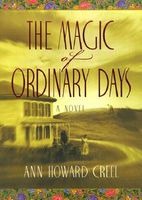
BETH'S PICKS MAY 2011 MAGIC OF ORDINARY DAYS
MAGIC OF ORDINARY DAYS
BY ANN HOWARD CREEL
SUMMARY:
Set in 1944 Colorado, The Magic of Ordinary Days is the story of a young woman, Olivia Dunne, who became pregnant before marriage. Her father, Rev. Dunne, decided to deal with the situation, by arranging a marriage to a shy farmer through another preacher. The groom, Ray Singleton, lives on a remote farm and is very different than Livy. Ray focuses on what is close to him: his family, his land, today. Livy thinks on a much grander scale: the world, ancient civilizations, faraway places.
Ray's farm uses the help of Japanese Americans from a nearby Japanese American internment camp to help work the farm. Livy befriends two well-educated Japanese American women who were working the farm. She finds comfort and familiarity in their friendship. Livy is polite and civil to her new husband and his sister Martha, but she harbors feelings for the father of the baby, a World War II soldier, and feelings of guilt for the pregnancy. Ray, however, is caring, patient, and supportive of Livy, but the fact that she does not want him hurts him deeply. Slowly over time, the two come to understand and love each other...[Wikipedia]
ABOUT THE AUTHOR:
Ann Howard Creel is the author of two award-winning young adult novels, Water at the Blue Earth and A Ceiling of Stars. This is her first adult novel.
REVIEWS:
A YA author’s nicely written adult debut novel blends historical richness and a fine sense of place to tell the story of a woman’s developing love for her husband—and for his Colorado farmland—over the course of six months in 1944….
Creel does a delightful job of evoking first the dreariness of the Singleton farm and Olivia's unnerving loneliness, then the slow ripening of her affection for Ray, a simple but profoundly kind and gentle man….The author gives her heroine a satisfying emotional depth, moving Olivia through phases of affection and disappointment with assured confidence before closing with a tranquil scene after the baby is born.
A light, precisely observed novel. (Kirkus)
AUTHOR’S WEBSITE:
http://annhowardcreel.com/
Tuesday, May 3, 2011
Best in Books May 2011

Olive Kitteridge by Elizabeth Strout
Olive Kitteridge was the 2009 Pulitzer Prize for Fiction as well as receiving the American Library Association's 2009 Notable Book Award and Library Journal's 2008 Best Books Award. The book is a series of 13 short stories that take place in a small coastal Maine town. Olive Kitteridge, an unassuming, but acidic resident, is threaded throughout the stories that chronicle the changes around and to Olive.
Review
*Starred Review* The abrasive, vulnerable title character sometimes stands center state, sometimes plays a supporting role in these 13 sharply observed dramas of small-town live from Strout (Abide with Me, 2006, etc.) Olive Kitteridge certainly makes a formidable contrast with her gentle, quietly cheerful husband Henry from the moment we meet them both in "Pharmacy," which introduces us to several other denizens of Crosby, Maine. Though she was a math teacher before she and Henry retired, she's not exactly patient with shy young people -- or anyone else. Yet she brusquely comforts suicidal Kevin Coulson in "Incoming Tide" with the news that her father, like Kevins's mother, killed himself. And she does her best to help anorexic Nina in "Starving," though Olive knows that the troubled girl is not the only person in Crosby hungry for love. Children disappoint, spouses are unfaithful and almost everyone is lonely at least some of the time in Strout's rueful tales. The Kitteridges' son Christopher marries, moves to California and divorces, but he doesn't come home to the house his parents built for him, causing deep resentments to fester around the borders of Olive's carefully tended garden. Tensions simmer in all the families here; even the genuinely loving couple in "Winter Concert" has a painful betrayal in its past. References to Iraq and 9/11 provide a somber context, but the real dangers here are personal; aging, the loss of love, the imminence of death. Nonetheless, Strout's sensitive insights and luminous prose affirm life's pleasures, as elderly, widowed Olive thinks, "It baffled her, the world. She did not want to leave it yet." A perfectly balanced portrait of the human condition, encompassing plenty of anger, cruelty and loss without ever losing sight of the equally powerful presences of tenderness, shared pursuits and lifelong loyalty. (Kirkus Reviews, February 1, 2008)
Book Discusion Questions
Elizabeth Strout Website
Thursday, April 7, 2011
BETH'S PICK APRIL'S AUTHOR: COLIN COTTERILL
Colin Cotterill Colin Cotterill brings a welcome spin to mysteries featuring a sleuthing medical examiner in his Siri Paiboun novels. Rather than rely upon a familiar Western setting, Cotterill transplants the genre to 1970s Asia, mixing mystery with politics, mysticism, and themes such as international relations, government bureaucracy and racism. Cotterill’s witty and fast paced narratives are not only filled with cultural insight, but also feature compelling characters, particularly his clever protagonist, Laotian National Coroner Siri Paiboun. He is a reluctant communist and (even more reluctant) national coroner. The 72 year-old uses forensic deduction, spirit intuition, and old-fashioned sleuthing to figure out any suspicious deaths that come his way. Finding his charming characters and crisply plotted narratives in these mysteries with an educational undercurrent, readers will enjoy Cotterill’s works. (Novelist)
About the Author: Colin Cotterill was born in London in 1952 and taught and trained teachers around the world before settling in Thailand. He spent several years in Laos, initially with UNESCO, before he moved on to become involved in child protection in the region and set up a non-governmental organization in Phuket. He later moved on to ECPAT, an international organization combating child prostitution and pornography. Colin writes and illustrates full time, and lives in Chumphon on the Gulf of Thailand with his wife, Jessi, and a bunch of dogs. He is a Dilys Award winner.
Colin Cotterill’s home page: http://www.colincotterill.com/home.html
Listen to NPR audio interview: http://www.npr.org/templates/story/story.php?storyId=93590413
Wikipedia link on the author: http://en.wikipedia.org/wiki/Colin_Cotterill
There are seven so far in the series including:
The Coroner’s Lunch Seventy-two-year-old Dr. Siri Paiboun, a coroner in Laos, confronts shamans, dreams, conversations with the dead, and an international cover-up, in his attempts to solve a series of murders of Vietnamese soldiers and the wife of a party leader.
Reviews: "This series kickoff is an embarrassment of riches: Holmesian sleuthing, political satire, and [a] droll comic study of a prickly late bloomer."-Kirkus Reviews (starred review)
"The sights, smells, and colors of Laos practically jump of the pages of this inspired, often wryly witty first novel."-"Denver Post
"A wonderfully fresh and exotic mystery. . . . If Cotterill . . . had done nothing more than treat us to Siri's views on the dramatic, even comic crises that mark periods of government upheaval, his debut mystery would still be fascinating. But the multiple cases spread out on Siri's examining table . . . are not cozy entertainments, but substantial crimes that take us into the thick of political intrigue."-"The New York Times Book Review”
"In Siri, Cotterill has created a detective as distinctive as Maigret or Poirot."-"Orlando Sentinel"
"The author gives us exotic locations; a world that few of us know well; crisp, intelligent, and often-witty writing; and, most of all, a hero unlike any other." -"The Philadelphia Inquirer"
Thirty-three Teeth Dr Siri Paiboun has rather enjoyed his first five months in office. Now, as hot-season nights close in, Siri is spirited away from Laos' steamy capital on a Matter of National Security. Arriving in Luang Prabang, he's a busy man, examining carbonized corpses, dining with the deposed king and being rescued by the ghost of an elephant.
Disco for the Departed Coroner Siri Paiboun must identify a corpse found near the mansion of the new Laotian president, an investigation which includes communication with the dead, sacrificial rituals, a marriage proposal, and strange disco music that only the doctor can hear.
Anarchy and Old Dogs When a blind, retired dentist is run down by a logging truck as he crosses the road to post a letter, Dr Siri Paiboun, official and only coroner of Laos, finds himself faced with his most explosive case yet. The dentist's mortal remains aren't nearly as intriguing as the letter in his pocket.
Curse of the Pogo Stick National Coroner Dr. Siri is kidnapped by Hmong villagers who want him to lift a curse from the headman's daughter.
The Merry Misogynist In peaceful Buddhist Laos, Dr. Siri confronts a deadly Casanova targeting lovely young women.
Love Songs from a Shallow Grave When a female security officer is discovered stabbed through the heart with a fencing sword, Dr. Siri's instincts tell him there is more to the mystery than anyone can imagine.
Best in Books April 2011
Freedom by Jonathan FranzenFreedom, an epic family story, garnered several awards in 2010 including Library Journal's Top Ten and the New York Times Notable Books for Fiction and Poetry. The story revolves around Patty and Walter Berglund's family relationships, while Franzen weaves the ethical, theological and psychological cost of freedom into the book. See the links below for questions that will guide a robust discussion.
Library Journal Review "Use Well Thy Freedom": this motto, etched in stone on a college campus, hints at the moral of Franzen's sprawling, darkly comic new novel. The nature of personal freedom, the fluidity of good and evil, the moral relativism of nearly everything-Franzen takes on these thorny issues via the lives of Walter and Patty Berglund of St. Paul. With two kids, a Volvo in the garage, and a strong social conscience, the Berglunds allow their good deeds to be tinged with just a hint of smugness (which eventually comes back to haunt them). Weaving in and out of their lives is old college friend Richard Katz, low-level rock star and ultra-hip antihero. Time goes by, the kids grow up, betrayals occur, and the thin line between right and wrong blurs. Fully utilizing their freedom-to make mistakes, confuse love with lust, and mix up goodness and greed-the Berglunds give Franzen the opportunity to limn the absurdities of our modern culture. Granola moms, raging Republicans, war profiteers, crooked environmentalists, privileged offspring, and poverty-bred rednecks each enjoy the uniquely American freedom to make disastrous choices and continually reinvent themselves. Verdict As in his National Book Award winner, The Corrections, Franzen reveals a penchant for smart, deceptively simple, and culturally astute writing. Highly recommended. [See Prepub Alert, LJ 4/15/10.]-Susanne Wells, P.L. of Cincinnati & Hamilton Cty. (c) Copyright 2010. Library Journals LLC, a wholly owned subsidiary of Media Source, Inc. No redistribution permitted.
Discussion Questions
Jonathan Franzen Biographical information and Discussion Questions
Oprah Book Club Discussion Questions
Friday, April 1, 2011
Classic Suggestion April 2011
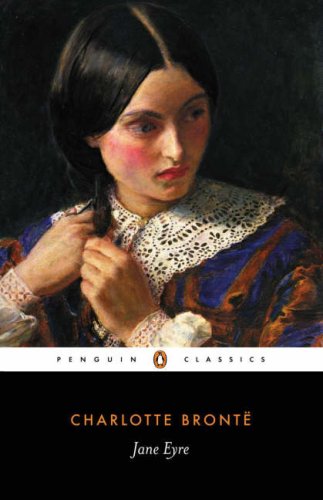
Jane Eyre by Charlotte Bronte
Born into a poor family and raised by an oppressive aunt, young Jane Eyre becomes the governess at Thornfield Manor to escape the confines of her life. There her fiery independence clashes with the brooding and mysterious nature of her employer, Mr. Rochester. But what begins as outright loathing slowly evolves into a passionate romance. When a terrible secret from Rochester's past threatens to tear the two apart, Jane must make an impossible choice: Should she follow her heart or walk away and lose her love forever?
Unabashedly romantic and utterly enthralling, Jane Eyre endures as one of the greatest love stories of all time. -product description
Disucssion Questions, About the Author, Related Titles
Wednesday, March 2, 2011
Beth's Picks--March 2011

Little Princes by Conor Grennan
Summary:
One Person Can Make a Difference In search of adventure, twenty-nine-year-old Conor Grennan traded his day job for a year-long trip around the globe, a journey that began with a three-month stint volunteering at the Little Princes Children's Home, an orphanage in war-torn Nepal. Conor was initially reluctant to volunteer, unsure whether he had the proper skill, or enough passion, to get involved in a developing country in the middle of a civil war. But he was soon overcome by the herd of rambunctious, resilient children who would challenge and reward him in a way that he had never imagined. When Conor learned the unthinkable truth about their situation, he was stunned: The children were not orphans at all. Child traffickers were promising families in remote villages to protect their children from the civil war-for a huge fee-by taking them to safety. They would then abandon the children far from home, in the chaos of Nepal's capital, Kathmandu. For Conor, what began as a footloose adventure becomes a commitment to reunite the children he had grown to love with their families, but this would be no small task. He would risk his life on a journey through the legendary mountains of Nepal, facing the dangers of a bloody civil war and a debilitating injury. Waiting for Conor back in Kathmandu, and hopeful he would make it out before being trapped in by snow, was the woman who would eventually become his wife and share his life's work. Little Princes is a true story of families and children, and what one person is capable of when faced with seemingly insurmountable odds. At turns tragic, joyful, and hilarious, Little Princes is a testament to the power of faith and the ability of love to carry us beyond our wildest expectations.
About the Author:
http://www.harpercollins.com/author/microsite/about.aspx?authorid=36296
Author discusses Little Princes:
http://www.youtube.com/watch?v=SzS9v1TBsbM
Review:
New York Journal of Books:
When I received this book in the mail, having only a tiny blurb to read about it, I made the assumption it was a book about a man who had traveled to Nepal and adopted children internationally after working at the orphanage. I couldn’t have been more wrong. This is instead the story of a man who refused to turn a blind eye when hints surfaced that death certificates had been forged, that government corruption was rampant, and that child slavery was common in Nepal.
Little Princes is the story of what happens when you pursue the truth and passionately seek to solve a complicated social problem in a country with little or no infrastructure and few resources. It is a gorgeous story of love and passion and what happens when you choose to follow a path that you didn’t know existed.
Grennan, from time to time, returned home to the United States to visit family. During one of those visits in 2006, he set up a foundation to protect the children of Nepal. The foundation is a nonprofit called Next Generation Nepal. It has a website for more information or involvement.
While advocating for funding of the nonprofit and making connections, Grennan received an email from a fellow University of Virginia graduate named Liz looking for information about volunteering in an orphanage. Her email correspondence progressed and eventually became a plan to meet when she also comes to India and to work in an orphanage. Without giving the ending away, this story also contains a healthy dose of romance.
In light of the very real discovery of rampant child trafficking in Nepal, there should also be more thought given to the complex situations in many areas of the world where war, poverty, and natural disaster might have bred similar opportunities. There are tens of thousands of children still missing in Nepal.
Grennan’s foundation remains active and continues to reunite children with their families. http://www.nextgenerationnepal.org/
Book Discussion Questions:
Tuesday, March 1, 2011
Best in Books March 2011
Columbine by David Cullen
Columbine received the 2010 Reference and User Service Association's Notable Books for Adults Nonfiction Award and the 2010 Edgar Award for Best Fact Crime.
On April 20, 1999, two boys left an indelible stamp on the American psyche. Their goal was simple: to blow up their school, Oklahoma-City style, and to leave "a lasting impression on the world." Their bombs failed, but the ensuing shooting defined a new era of school violence-irrevocably branding every subsequent shooting "another Columbine." When we think of Columbine, we think of the Trench Coat Mafia; we think of Cassie Bernall, the girl we thought professed her faith before she was shot; and we think of the boy pulling himself out of a school window -- the whole world was watching him. Now, in a riveting piece of journalism nearly ten years in the making, comes the story none of us knew. In this revelatory book, Dave Cullen has delivered a profile of teenage killers that goes to the heart of psychopathology. He lays bare the callous brutality of mastermind Eric Harris, and the quavering, suicidal Dylan Klebold, who went to prom three days earlier and obsessed about love in his journal. The result is an astonishing account of two good students with lots of friends, who came to stockpile a basement cache of weapons, to record their raging hatred, and to manipulate every adult who got in their way. They left signs everywhere, described by Cullen with a keen investigative eye and psychological acumen. Drawing on hundreds of interviews, thousands of pages of police files, FBI psychologists, and the boy's tapes and diaries, he gives the first complete account of the Columbine tragedy. In the tradition of HELTER SKELTER and IN COLD BLOOD, COLUMBINE is destined to be a classic. A close-up portrait of hatred, a community rendered helpless, and the police blunders and cover-ups, it is a compelling and utterly human portrait of two killers-an unforgettable cautionary tale for our times.
Reviews
Booklist Review
*Starred Review* Although much has been written about the 1999 shooting at Columbine High School, little of it has helped to explain why two high-school students went on a rampage, killing 13 people and wounding scores of others. Cullen, acclaimed expert on Columbine, offers a penetrating look at the motivation and intent of the shooters, Eric Harris and Dylan Klebold. Drawing on interviews, police records, media coverage, and diaries and videotapes left behind by the shooters, Cullen examines the killers' beliefs and psychological states of mind. Chilling journal entries show a progression from adolescent angst to psychopathic rage as they planned a multistage killing spree that included bombs that ultimately didn't detonate. Cullen goes beyond detailing the planning and execution of the shootings, delving into the early lives of the killers as well. He explores the aftermath for the town of Littleton, Colorado: survivors' stories, investigation into how the sheriff's department mishandled the crisis, several ongoing legal issues, exploitation of the shooting by some religious groups and sensationalists, and the school's battle to regain its identity. Cullen debunks several Columbine myths, including the goth angle and a martyrdom story of a girl who proclaimed her belief in God before she was killed. Graphic and emotionally vivid; spectacularly researched and analyzed.--Bush, Vanessa Copyright 2009 Booklist
Publishers Weekly Review
In this remarkable account of the April 20, 1999, Columbine High School shooting, journalist Cullen not only dispels several of the prevailing myths about the event but tackles the hardest question of all: why did it happen? Drawing on extensive interviews, police reports and his own reporting, Cullen meticulously pieces together what happened when 18-year-old Eric Harris and 17-year-old Dylan Klebold killed 13 people before turning their guns on themselves. The media spin was that specific students, namely jocks, were targeted and that Dylan and Eric were members of the Trench Coat Mafia. According to Cullen, they lived apparently normal lives, but under the surface lay "an angry, erratic depressive" (Klebold) and "a sadistic psychopath" (Harris), together forming a "combustible pair." They planned the massacre for a year, outlining their intentions for massive carnage in extensive journals and video diaries. Cullen expertly balances the psychological analysis-enhanced by several of the nation's leading experts on psychopathology-with an examination of the shooting's effects on survivors, victims' families and the Columbine community. Readers will come away from Cullen's unflinching account with a deeper understanding of what drove these boys to kill, even if the answers aren't easy to stomach. (Apr. 6) (c) Copyright PWxyz, LLC. All rights reserved
David Cullen web site
Monday, February 28, 2011
Classic Suggestion March 2011
Vanity Fair by William Thackeray
“I think I could be a good woman, if I had five thousand a year,” observes beautiful and clever Becky Sharp, one of the wickedest—and most appealing—women in all of literature. Becky is just one of the many fascinating figures that populate William Makepeace Thackeray’s novel Vanity Fair, a wonderfully satirical panorama of upper-middle-class life and manners in London at the beginning of the nineteenth century.
Scorned for her lack of money and breeding, Becky must use all her wit, charm and considerable sex appeal to escape her drab destiny as a governess. From London’s ballrooms to the battlefields of Waterloo, the bewitching Becky works her wiles on a gallery of memorable characters, including her lecherous employer, Sir Pitt, his rich sister, Miss Crawley, and Pitt’s dashing son, Rawdon, the first of Becky’s misguided sexual entanglements.
Filled with hilarious dialogue and superb characterizations, Vanity Fair is a richly entertaining comedy that asks the reader, “Which of us is happy in this world? Which of us has his desire? or, having it, is satisfied?”
-Product Description
Discussion Questions
William Thackeray Biography
Wikipedia Article
Subscribe to:
Posts (Atom)